 , fast delivery, and backed by our world-class customer service every step of the way.
  1-800-881-6093
 Back
Back
Packaging Trends 2026 for Design and Product Leaders
The dominant packaging trends for 2026 come down to three interlocking priorities: substantiated sustainability (verified claims, mono-materials, circularity), digital-enhanced design (AI, QR/AR, digital product passports), and personalization at scale. Innova Market Insights’ top global packaging trends report organizes 2026 around exactly these pillars, adding health-forward convenience and sensory unboxing as close seconds. Together, they reshuffle procurement, design, and R&D priorities for every brand owner planning launches in the next 12–18 months.
Here are the trends you need to act on now:
Substantiated sustainability: Lifecycle data and verified recycled content are replacing vague “eco” claims as the baseline expectation, driven by regulatory pressure (EU Packaging and Packaging Waste Regulation) and consumer scrutiny.
Digital-enhanced packaging: QR codes, NFC, AR overlays, and digital product passports are moving from pilot to standard, enabling traceability and post-purchase engagement.
Personalization and adaptive packaging: Variable-format SKUs, Braille, and limited-edition runs require structural and supply-chain changes, not just artwork swaps.
Material innovation: Bio-based films from Georgia Tech and Kyushu University research are approaching performance parity with conventional plastics in lab conditions, though scale remains a constraint.
Sensory unboxing: Tactile finishes, right-sized formats, and organized layouts drive social shareability and reduce returns for DTC brands.
Refillable and portion formats: Smaller, refillable, and active-packaging formats meet health-forward convenience demand while cutting material use.
Accessibility and inclusive design: Braille, easy-open mechanisms, and high-contrast labeling widen market reach and reduce compliance risk.
Traceability and verified claims: UV tagging, digital watermarks, and blockchain-backed passports are the operational backbone for substantiated sustainability.
Adoption and testing: Short closed-loop pilots (3–6 months) are the fastest path from trend to scaled production without overcommitting tooling budgets.
Packwire’s 3D configurator and low-minimum short runs make it practical to prototype structural changes and personalization tests before scaling.
Key Takeaways
The most important action for 2026 is to run short, closed-loop pilots that prove function, cost, and end-of-life claims before scaling, because nearly all brand owners are changing packaging materially within three years and the brands that test cheaply will scale faster.
| Point | Details |
|---|---|
| Substantiated sustainability is the baseline | Verified recycled content, mono-materials, and lifecycle data are now minimum expectations, not differentiators. |
| Digital features enable traceability | QR (GS1 Digital Link), UV tags, and digital watermarks deliver the lifecycle data regulators and retailers increasingly require. |
| Personalization needs supply-chain alignment | Variable-format SKUs and short digital print runs require structural changes, not just artwork swaps; test artwork variation before structural. |
| Pilot before scaling | A 3–6 month closed-loop pilot measuring cost per unit, recycle rate, and NPS is the lowest-risk path from trend to production. |
| Packwire for rapid prototyping | Packwire’s 3D configurator and low-minimum short runs let you validate dielines and test personalization formats before committing to full production. |
Table of Contents
What do the packaging trends for 2026 tell us about sustainability?
How is digital technology changing packaging design and traceability?
What does personalization really require from your packaging supply chain?
How do refillable formats and portion packs fit your 2026 roadmap?
What accessibility features should your packaging include in 2026?
How do you verify sustainability claims with traceability technology?
What do the packaging trends for 2026 tell us about sustainability?
Sustainability in 2026 is no longer a positioning choice. It is an evidence requirement. Brands that cannot produce lifecycle data, certified recycled content percentages, or verified end-of-life routes are increasingly exposed to both regulatory action and consumer backlash. The EU Packaging and Packaging Waste Regulation (PPWR) is the clearest signal: it mandates recyclability targets, recycled content minimums, and restrictions on unnecessary packaging formats, and while it applies directly to the EU market, U.S. brands selling into Europe or sourcing from European suppliers are already adjusting procurement to comply.
Packaging Insights reports that a large majority of consumers surveyed are willing to pay more for sustainably packaged products, and that verified claims (not just printed logos) are what drive that willingness. That gap between “we use eco materials” and “here is the certified data” is where most brands are losing credibility right now.
Stat to know: 85% of consumers say they are willing to pay a premium for packaging with verified sustainability credentials, according to surveys cited by Packaging Insights.
The practical decision flow for your material selection looks like this:
| Material Path | Recyclability | Certified Content Options | Cost vs. Virgin | Supply Risk |
|---|---|---|---|---|
| Mono-paperboard (SBS, CRB) | High (curbside) | FSC, SFI, recycled content % | Low to moderate | Low |
| Mono-plastic (PE, PP) | Moderate (store drop-off) | ISCC PLUS mass-balance | Moderate | Low to moderate |
| Bio-based films (PLA, cellulose) | Low (industrial compost) | ISCC PLUS, TÜV Austria | High | High |
| Molded pulp | High (curbside) | Recycled fiber content | Moderate | Moderate |
Mono-paperboard and mono-plastic structures are the fastest wins for brands that need to demonstrate recyclability now. ISCC PLUS mass-balance certification for polymers is gaining traction as a credible bridge between virgin and fully recycled content, particularly for flexible packaging where mechanical recycled feedstocks are still limited. Industry reporting notes that sustainability has evolved into a structural constraint driven by regulation and traceability requirements, pushing brands toward mono-materials and verified content systems like ISCC PLUS rather than treating sustainability as a marketing add-on.
Two case studies worth studying: Carlsberg’s Green Fibre Bottle project demonstrates that fiber-based primary packaging for liquids is technically feasible, though it requires significant R&D investment and retailer partnership to scale. DS Smith and Mondi have both published pilots showing that mono-material corrugated and paper-based flexible formats can replace multi-layer laminates for specific food and e-commerce applications without sacrificing shelf life, provided the barrier coating is water-based and recyclable.
Pro Tip: Before switching materials, request a third-party recyclability assessment (e.g., How2Recycle certification in the U.S.) alongside your supplier’s data sheet. A material that is technically recyclable but not accepted in your target market’s curbside program is still a greenwashing risk. Pair this with eco-friendly packaging ROI analysis to build the internal business case.
How is digital technology changing packaging design and traceability?
Digital features are no longer differentiators. For brands selling in regulated markets or competing for shelf space with transparency-conscious retailers, QR codes, NFC chips, digital watermarks, and blockchain-backed product passports are becoming table stakes. The EU’s push toward mandatory digital product passports for certain product categories is accelerating adoption among brands that source or sell across the Atlantic, and that momentum is landing in U.S. procurement conversations faster than most teams anticipated.
Esko’s 2026 packaging trends resources describe how agentic AI is now handling dieline optimization, nest layouts, and waste-optimized print-imposition recommendations before an order is placed, shortening design-to-production cycles and reducing material waste in the process. That is a meaningful shift: instead of a designer manually adjusting a dieline to reduce substrate waste, an AI layer proposes structural changes in real time, and a 3D configurator renders the result before any tooling commitment.
Here is what a practical digital packaging tech stack looks like for a 2026 pilot:
QR codes (GS1 Digital Link standard): Low cost, high consumer adoption, links to product pages, recycling instructions, or loyalty programs. Works with any printer.
NFC tags: Higher cost per unit, but enables tap-to-authenticate and premium unboxing experiences. Best for high-value SKUs where anti-counterfeit matters.
Digital watermarks (Digimarc, HolyGrail 2.0): Invisible to consumers, machine-readable at MRFs for sorting accuracy. Requires print partner capability.
Blockchain-backed passports: Highest cost and complexity, but delivers immutable lifecycle data for regulated categories (pharmaceuticals, luxury goods, electronics).
AR overlays: Consumer-facing engagement layer, typically triggered by QR or image recognition. Drives social sharing and dwell time on-pack.
When briefing your printer or label supplier on digital features, ask three specific questions: Can they print GS1 Digital Link-compliant QR codes at your required resolution? Do they have experience with digital watermark integration? And what is their data handoff process for connecting print runs to your product information management (PIM) system?
Pro Tip: Start with GS1 Digital Link QR codes on your next print run. They are backward-compatible with standard QR scanners, forward-compatible with digital passport requirements, and add near-zero cost at print time. You can layer richer data behind the link later without reprinting.
What does personalization really require from your packaging supply chain?
Personalization in 2026 means more than printing a customer’s name on a box. It requires structural and supply-chain changes: variable-format SKUs for different retail channels, Braille and tactile labeling for accessibility compliance, regionally tailored artwork runs, and limited-edition structural formats that drive loyalty without permanently fragmenting your SKU portfolio.
The procurement implications are real. Shorter digital print runs cost more per unit than offset litho at volume, but they eliminate the minimum order quantity barrier that has historically locked small and mid-sized brands out of personalization. Digital short-run printing also makes it practical to test regional artwork variations, seasonal formats, or influencer-edition boxes without committing to a 10,000-unit minimum.
Key personalization formats to evaluate for 2026:
Variable-format SKUs: Different structural sizes for DTC, club retail, and convenience channels, each optimized for that channel’s fulfillment and display requirements.
Variable artwork (versioning): Regional, seasonal, or campaign-specific artwork printed in short runs without new tooling.
Braille and tactile labeling: Required for pharmaceutical and increasingly expected for food and personal care. Adds modest cost but opens a wider consumer base.
Limited-edition structural formats: Custom die-cut shapes or premium rigid box formats for seasonal launches or collaborations. High perceived value, short production runs.
Personalized mailer boxes: Name-printed or occasion-specific mailer formats for subscription and DTC brands, enabled by digital print-on-demand workflows.
Custom branded e-commerce packaging works best when the structural format and artwork are designed together from the start, not retrofitted.
Pro Tip: Cap your personalization experiments at two or three structural variants per product line. SKU proliferation is the hidden cost of personalization pilots: each new structural variant adds a new SKU to manage in your ERP, a new safety stock calculation, and a new supplier relationship to maintain. Test artwork variation first (lower risk), then structural variation once you have demand signal.
Why does sensory unboxing matter for e-commerce conversion?
Sensory unboxing is the point where packaging design meets fulfillment economics. A box that delights the customer on arrival, photographs well for social media, and ships without damage does three things at once: it reduces returns, generates organic user content, and reinforces brand value at the moment of highest attention. For DTC brands, that moment is often the only physical brand touchpoint in the entire customer journey.
Right-sizing is the fastest lever for both sustainability and unboxing quality. Excess void fill signals waste to the consumer before they even see the product, and it adds real cost in dunnage materials and dimensional weight charges. HelloFresh’s organized, compartmentalized box layouts are a well-studied example of how structured interior design reduces product movement, eliminates the need for excessive fill, and creates a predictable, satisfying open experience at scale.
Stat to know: Consumers consistently rank recyclable and right-sized packaging among their top preferences for e-commerce delivery, with excess packaging cited as a primary driver of negative brand perception in post-purchase surveys.
Do and don’t checklist for e-commerce unboxing design:
Do right-size your box to the product, targeting less than 20% void space as a starting benchmark.
Do use recyclable paper-based void fill or molded pulp cradles instead of expanded polystyrene.
Do design the open sequence intentionally: what does the customer see first, second, third?
Do include a tactile finish (soft-touch laminate, emboss, or spot UV) on at least one surface to create a premium feel.
Don’t use multi-layer tissue paper as a sustainability signal if it is not recyclable or compostable in your target market.
Don’t over-engineer the interior structure at the expense of returns processing speed.
Don’t treat the exterior print as the only brand moment; the interior print and insert design matter equally for social sharing.
For e-commerce packaging optimization, the practical constraint is that your fulfillment team needs to pack the box quickly and consistently. Any unboxing design that requires more than two manual steps to assemble or pack will degrade in quality at volume. Design for the picker, not just the recipient.
What material innovations should you watch in 2026?
Bio-based films are the most watched category in packaging materials right now, and the lab results are genuinely promising. Georgia Tech researchers developed biodegradable plant-based films combining cellulose nanomaterials and food-derived components that matched or outperformed common packaging plastics in oxygen and moisture barrier tests at high humidity. The caveat is consistent across every bio-based film development: scaling and supply chain remain the limiting factors, not performance.
Kyushu University’s research adds another data point. The researchers note that water solubility and scale-up work remain before commercial viability. These are not production-ready materials for most brands today, but they signal where the performance ceiling for bio-based films is heading, and they justify keeping bio-based alternatives on your 2–3 year materials roadmap.
| Material Category | Barrier Performance | Recyclability | Cost vs. Conventional | Scale Availability |
|---|---|---|---|---|
| Mono-paperboard (SBS/CRB) | Low to moderate | High (curbside) | Comparable | High |
| Mono-plastic (PE/PP) | Moderate to high | Moderate (drop-off) | Comparable | High |
| Bio-based PLA films | Moderate | Low (industrial compost) | 20% premium | Moderate |
| Cellulose nanocomposite films | High (lab) | Low (emerging) | High | Low (R&D stage) |
| Molded pulp | Low | High (curbside) | Comparable to moderate | Moderate to high |
For most brands, the practical 2026 materials decision is between mono-paperboard and mono-plastic, with bio-based films as a pilot category for specific high-value SKUs where the sustainability story justifies the cost premium. ISCC PLUS mass-balance certification for recycled-content polymers is the most credible near-term option for flexible packaging applications where bio-based films are not yet viable.
Pro Tip: When piloting a bio-based or novel material, measure four things: barrier performance against your current spec, shelf life under your distribution conditions, consumer perception in a blind test, and end-of-life route availability in your top three markets. A material that passes the first two but fails the fourth is a greenwashing risk, not a sustainability win.
How do refillable formats and portion packs fit your 2026 roadmap?
Refillable and portion-focused formats are gaining ground for two distinct reasons. Refillable systems reduce total material use per product cycle and align with extended producer responsibility (EPR) frameworks that are expanding across U.S. states. Portion packs address health-forward convenience demand: smaller, pre-measured formats that reduce food waste and support portion control are growing in food, beverage, and personal care categories.
The manufacturing shift is real. Moving from a single-use primary package to a refillable system requires new tooling (the refillable container), a new secondary format (the refill pouch or concentrate), and retailer or DTC logistics to support the return or refill loop. That is a 12–24 month design and tooling timeline for most brands, not a quick pivot.
Practical formats to evaluate:
Concentrate refill pouches: Flexible, lightweight, and low-material. Works for cleaning products, beverages, and personal care. Requires consumer behavior change.
Rigid refillable containers with refill inserts: Higher upfront tooling cost, but strong brand equity and premium positioning. Common in beauty and fragrance.
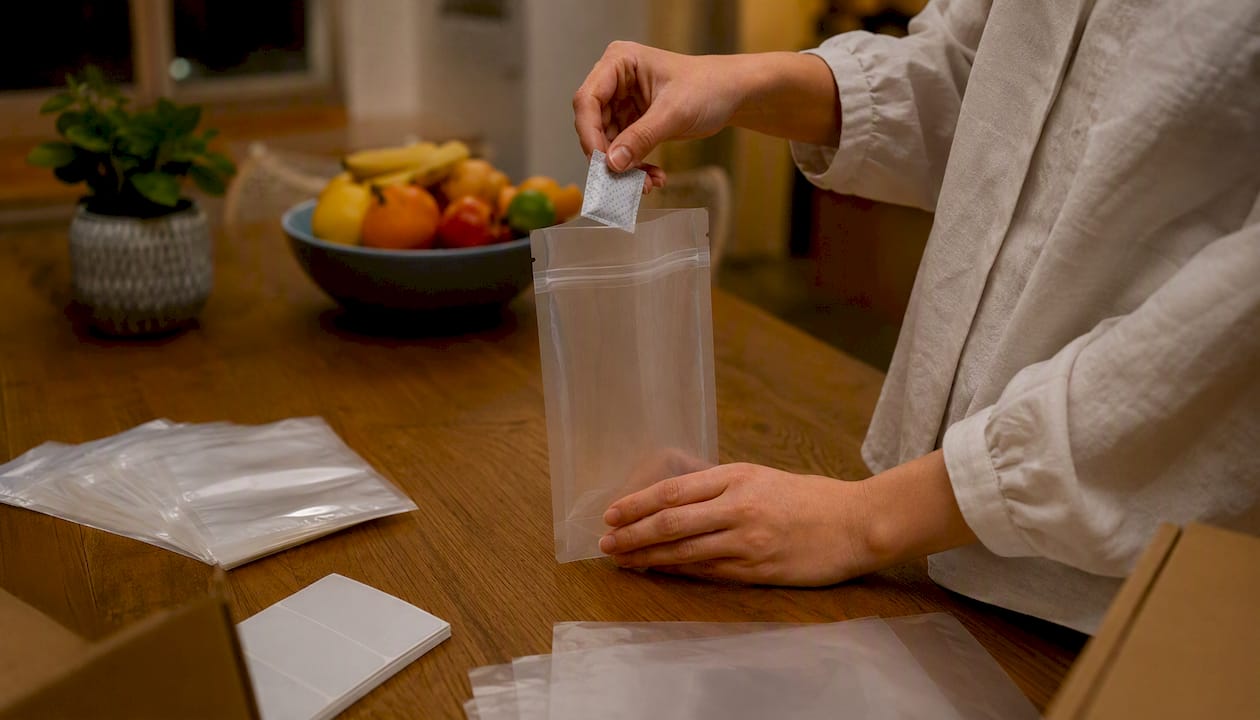
Portion-control blister and stick packs: Single-serve formats for food, supplements, and personal care. Active packaging (oxygen scavengers, desiccants) extends freshness without preservatives.
Lightweight luxury formats: Reduced-weight glass or aluminum with premium finishes. Cuts material use while maintaining premium shelf presence.
The cost model for refillable formats typically shows higher upfront tooling and design costs offset by lower per-unit material cost at scale, once the refill SKU reaches sufficient volume. Plan for 18–24 months before the economics favor refillable over single-use at typical mid-market brand volumes.
Pro Tip: Pair active packaging inserts (oxygen scavengers, moisture absorbers) with portion-pack formats to extend freshness without increasing packaging complexity. A single-serve pouch with an integrated desiccant can match the shelf life of a larger format, which is the key objection to overcome when retailers evaluate portion SKUs for planogram space.
What accessibility features should your packaging include in 2026?
Accessibility is both a market expansion opportunity and a compliance consideration. The Americans with Disabilities Act (ADA) and the broader push toward universal design mean that packaging features like Braille, easy-open mechanisms, and high-contrast labeling are increasingly expected across food, pharmaceutical, and personal care categories. Brands that build these features in from the design stage spend less than those who retrofit them after a compliance review.
Checklist of accessible packaging features to evaluate:
Braille labeling: Required for pharmaceutical products in many markets; increasingly adopted in food and personal care for brand differentiation. Can be embossed directly on carton or applied via label.
Tactile cues: Raised indicators for orientation, dosage, or product type. Particularly valuable for visually impaired users navigating multi-SKU product lines.
Easy-open mechanisms: Tear notches, perforations, and resealable closures that require less grip strength. Critical for aging consumers and users with limited dexterity.
High-contrast typography: Minimum 4.5:1 contrast ratio (WCAG 2.1 standard) between text and background. Improves legibility for low-vision users and in poor lighting conditions.
Multilingual icons: Pictogram-based instructions reduce language barriers and improve compliance for products sold across multiple U.S. regional markets.
Clear dosage and warning hierarchy: Logical information architecture that puts critical information (allergens, dosage, warnings) in a consistent, predictable location.
For user testing, recruit a representative panel of 8–12 participants that includes users aged 65+, users with low vision, and users with limited hand strength. Run a timed open-and-use task and measure time-to-open, error rate, and self-reported confidence. A quick guide to packaging design covers the structural fundamentals that underpin accessible formats.
Pro Tip: Test your packaging with one hand. A significant share of consumers open packaging while holding something else, and easy-open features that require two hands fail in real-world use. One-handed open testing catches design failures that standard usability panels miss.
How do you verify sustainability claims with traceability technology?
Traceability technology is the operational backbone of substantiated sustainability. Without it, your recycled content percentage and end-of-life claims are assertions; with it, they are verifiable data points that can withstand retailer audits, regulatory review, and consumer scrutiny.
The Aldi and Arla pilot is the clearest recent proof of concept. Sun Chemical’s UV-tag inks and Polytag’s detection units at materials recovery facilities (MRFs) tracked milk bottle packaging through the recycling stream in an eight-week pilot, capturing real-time lifecycle data on recycling performance. The result is a closed-loop data set that proves what percentage of packaging actually reaches the recycling stream, not just what percentage is theoretically recyclable.
Comparison of tagging approaches:
UV tags (Polytag): Applied via standard printing, invisible to consumers, detected at MRFs. Low cost per unit, requires MRF partnership for detection. Best for high-volume consumer goods with established recycling streams.
Digital watermarks (HolyGrail 2.0 / Digimarc): Embedded in print artwork, machine-readable at sorting lines. No additional material cost, but requires print partner capability and sorting infrastructure investment.
NFC/RFID tags: Higher per-unit cost, consumer-readable, enables product authentication and post-purchase engagement alongside traceability. Best for premium or regulated categories.
Blockchain-backed passports: Highest cost and integration complexity. Delivers immutable, auditable lifecycle data. Justified for pharmaceuticals, luxury goods, and high-value electronics.
Pilot checklist for a traceability test:
Define your objective: recycling rate verification, anti-counterfeit, or consumer engagement?
Select your tagging technology based on cost per unit and infrastructure requirements.
Partner with at least one MRF or waste management operator for detection data.
Set a minimum sample size (typically 50,000–100,000 units for statistically meaningful MRF data).
Define KPIs upfront: recycling capture rate, data completeness, cost per data point.
Run for 8–12 weeks minimum to capture seasonal variation in recycling behavior.
Pro Tip: *Before committing to a blockchain-backed passport, ask whether your actual compliance or marketing objective requires immutability or just auditability.
How should you prototype and scale 2026 packaging ideas?
The fastest path from trend to scaled production is a short, closed-loop pilot of 3–6 months that proves function, cost, and end-of-life claims before you commit tooling budgets. L.E.K. Consulting’s 2026 CPG and foodservice brand owner packaging study reports that roughly 99% of brand owners plan significant packaging changes within the next three years to address sustainability, cost, and supply-chain pressures. That is not a slow-moving trend; it is a near-universal procurement shift happening on overlapping timelines.
Step-by-step pilot checklist:
Define your hypothesis. What specific claim are you testing? (“This mono-PE pouch achieves equivalent barrier performance to our current laminate at 15% lower cost.”)
Prototype two to three options. Use digital short-run printing and 3D configurator tools to validate dielines and artwork before committing to tooling.
Run lab and shelf tests. Barrier performance, drop test, shelf-life simulation, and recyclability assessment (How2Recycle or equivalent).
Launch a small live pilot. 5,000–25,000 units in a defined geography or channel. Measure cost per unit, damage rate, consumer NPS, and return rate.
Measure KPIs. Cost per unit vs. current, recycle rate (if tagged), NPS delta, and returns reduction.
Scale or iterate. If two of three KPIs hit target, scale. If not, iterate the prototype before committing.
Prototype budget ranges by scenario:
Low (artwork and structural validation only): $2,000–$8,000 for digital short-run samples and 3D configurator dieline testing. Timeline: 2–4 weeks.
Medium (lab testing plus small live pilot): $15,000–$50,000 including material testing, small print run, and consumer panel. Timeline: 8–16 weeks.
High (full pilot with traceability and retailer integration): $75,000–$200,000+ depending on tagging technology and retailer requirements. Timeline: 4–9 months.
Vendor selection criteria for 2026 pilots:
Ability to run digital short-run orders (no 10,000-unit minimums)
3D configurator support for dieline validation before print
QA and artwork review process before production
Traceability partner relationships (UV tag, digital watermark, or NFC capability)
Multisourcing options to reduce single-supplier risk
Pro Tip: When testing personalization variants, limit your pilot to one structural format with variable artwork rather than multiple structural variants simultaneously. You get cleaner demand signal, simpler inventory management, and a faster read on whether personalization drives the conversion or retention lift you are targeting. Packaging optimization guidance covers the operational side of managing pilot complexity.
What packaging aesthetics and design motifs define 2026?
The visual direction for 2026 favors human texture and meaning over algorithmic polish. Four motifs are emerging across CPG, DTC, and retail categories, each with specific production implications.
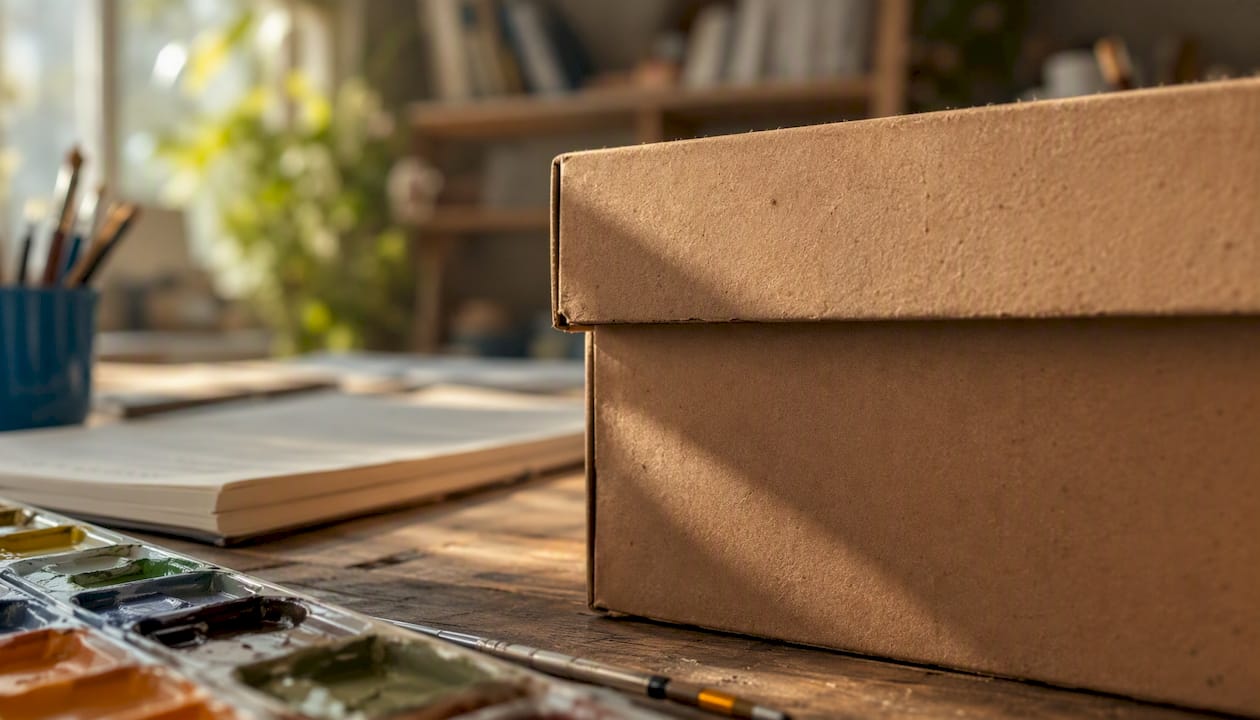
Tactile Craft signals authenticity through uncoated or lightly coated substrates, hand-drawn typography, and visible material texture. It works particularly well for food, beverage, and personal care brands positioning against mass-market competitors. The production constraint: uncoated stocks are more susceptible to scuffing in e-commerce fulfillment, so you need to specify a protective coating that does not undermine the tactile feel.
Micro-Industrial uses exposed structural elements, monochrome palettes, and utilitarian typography to signal transparency and function. It maps well to accessibility goals because high-contrast, minimal layouts naturally produce legible labeling. Watch for print registration challenges on textured or kraft substrates.
Neon Noir pairs deep, dark backgrounds with high-intensity accent colors. It photographs exceptionally well for social media and drives strong shelf standout in beauty and spirits categories. The production note: dark backgrounds require precise ink density control to avoid banding, and spot UV or foil accents add cost but significantly increase perceived premium.
Hyper-Bloom brings maximalist botanical and organic motifs to packaging, often with a hand-painted or watercolor quality. It is the strongest motif for brands leaning into the “human touch” counterpoint to AI-generated sameness. Soft-touch laminate pairs well with this aesthetic, but adds cost and can complicate recyclability if the laminate is not mono-material compatible.
Each motif carries finishing cost implications: soft-touch coatings, spot UV, and foil stamping each add $0.05–$0.30 per unit at typical mid-market volumes, and some finishing options are incompatible with curbside recyclability. Design your motif choice alongside your sustainability commitments, not after.
What packaging leaders should actually prioritize in 2026
The conversation around 2026 packaging trends tends to generate long lists of things to watch. What it underproduces is a clear sense of what to do first, given real budget and timeline constraints.
My read: substantiated sustainability is the non-negotiable foundation. Not because it is the most exciting trend, but because it is the one where inaction carries the highest risk. Regulatory pressure from the EU PPWR is already reshaping supplier conversations globally, and U.S. brands that wait for domestic equivalents before acting will find themselves behind on both procurement and consumer trust. Start with mono-material simplification and How2Recycle certification on your top three SKUs. That is a 3–6 month project with a clear ROI in reduced material complexity and a defensible sustainability claim.
Traceability pilots deserve a budget line in 2026, even if the full rollout is 2–3 years away. The Aldi/Arla UV-tagging pilot shows that an eight-week test can generate real recycling stream data at modest cost. That data is worth having before regulators require it, because it tells you where your packaging actually ends up, not where you hope it goes.
Personalization is the trend most likely to be over-invested in without a clear demand signal. The technology is ready; the supply chain is ready. What most brands lack is evidence that their specific customers will pay for or respond to personalized formats. Run a small variable-artwork test before committing to structural personalization. The 2022 holiday packaging trends analysis is a useful reminder that trend cycles move faster than tooling cycles, and the brands that win are the ones that test cheaply and scale quickly.
On supply chain: the L.E.K. data on near-universal packaging changes within three years is a planning signal, not just a statistic. Multisourcing is not optional risk management; it is the baseline for supply continuity.
How Packwire helps you move from trend to prototype faster
Testing 2026 packaging ideas does not require a six-figure tooling commitment or a 10,000-unit minimum order. Packwire’s online 3D configurator lets you validate dielines, artwork, and structural formats before a single box goes to print, which cuts the most expensive part of the prototyping cycle: discovering a structural problem after production.
For brands running personalization tests, variable-artwork short runs, or sustainability pilots, Packwire’s low-minimum order quantities mean you can produce 50–500 units to test a new format in a live channel before scaling. The custom box ordering platform covers mailer boxes, shipping boxes, folding cartons, and rigid boxes, with instant pricing and an artwork review process before print. If you are evaluating a new structural format for an e-commerce pilot or a limited-edition run, browse the full range of custom box styles to find the right starting point. Start your next packaging pilot with a 3D configurator session and get a production-ready dieline in hours, not weeks.
Sources
Top global packaging trends 2026. Consumers expect packaging
Top Packaging Trends 2026: Navigating sustainability, digital innovation & consumer-centric design
Researchers develop biodegradable plant-based packaging from natural fibers