 , fast delivery, and backed by our world-class customer service every step of the way.
  1-800-881-6093
 Back
Back
Stop Overpaying Dimensional Weight Boxes After USPS's 2026 Shift
Dimensional weight prices a package by the space it takes up, not what it weighs. Carriers calculate it as (length × width × height) ÷ a divisor, then bill whichever is greater: that DIM figure or the actual scale weight. The divisor and rounding rules differ by carrier, and USPS just changed both for 2026, which means boxes that shipped cheaply last year may not this year.
TL;DR:
- Moving USPS to a 139 divisor for parcels over one cubic foot increases billable weight by roughly 2 pounds on average.
- Correct measurement includes all protrusions and void fill, with each dimension rounded up to the next whole inch before calculation.
- Optimal cost control involves measuring high-volume boxes quarterly and designing custom boxes to minimize cubic waste below DIM thresholds.
- Disputes are more successful when backed by timestamped photographic records of accurate measurements, as carrier scans are often automated.
- Rerunning your top ten box measurements with current divisors can reveal more immediate savings than software upgrades or long-term planning.
Table of Contents
- What Is Dimensional Weight and How Do You Calculate It?
- How Do UPS, FedEx, and USPS Apply DIM Weight Differently?
- How Do You Measure a Package Correctly?
- What Are the Best Ways to Reduce Dimensional Weight Charges?
- How Can Packwire Tools Help You Control Shipping Costs?
- Why the Conventional DIM Weight Advice Falls Short
- Order Right-Sized Custom Boxes Built to Cut DIM Costs
- Sources
What Is Dimensional Weight and How Do You Calculate It?
Measuring a box for DIM weight starts with three numbers: the longest point of length, width, and height, each rounded up to the next whole inch before you do any math. A box that measures 11.2 inches gets billed as 12. That rounding rule alone catches more shippers off guard than any other part of the formula.
The dimensional weight formula is straightforward once you have clean measurements:
- Multiply length × width × height (in inches, each rounded up).
- Divide the result by the carrier's divisor (commonly 139, sometimes 166).
- Round the final answer up to the next whole pound.
- Compare that number to the actual scale weight. The carrier bills the higher one.
A few worked examples make this concrete. A small, dense box, say 8" × 6" × 4" holding a 4 pound tool, produces a cubic total of 192, divided by 139 equals 1.38, rounded up to 2 pounds. Actual weight wins, and you pay for 4 pounds. Flip it: a 24" × 18" × 12" box holding a 3 pound lamp shade totals 5,184 cubic inches. Divided by 139, that is 37.3, rounded to 38 pounds. You pay DIM weight, more than twelve times the actual weight. A borderline case sits right around 1,728 cubic inches (one cubic foot), which is exactly where the 2026 USPS threshold kicks in and changes which divisor applies.
Nonrectangular packages (tubes, odd-shaped displays) generally use a girth-based adjustment or the smallest rectangular box that would contain the item, since carriers do not have a universal formula for irregular shapes.

How Do UPS, FedEx, and USPS Apply DIM Weight Differently?
The divisor is where carriers quietly diverge, and getting it wrong is the fastest way to underbid your own shipping costs. UPS calculates dimensional weight using a 139 divisor for many Daily Rates and 166 for some Retail Rates, rounding each dimension up before multiplying. FedEx uses the same (L × W × H) ÷ divisor formula, applying 139 across most domestic services and billing whichever weight is greater.

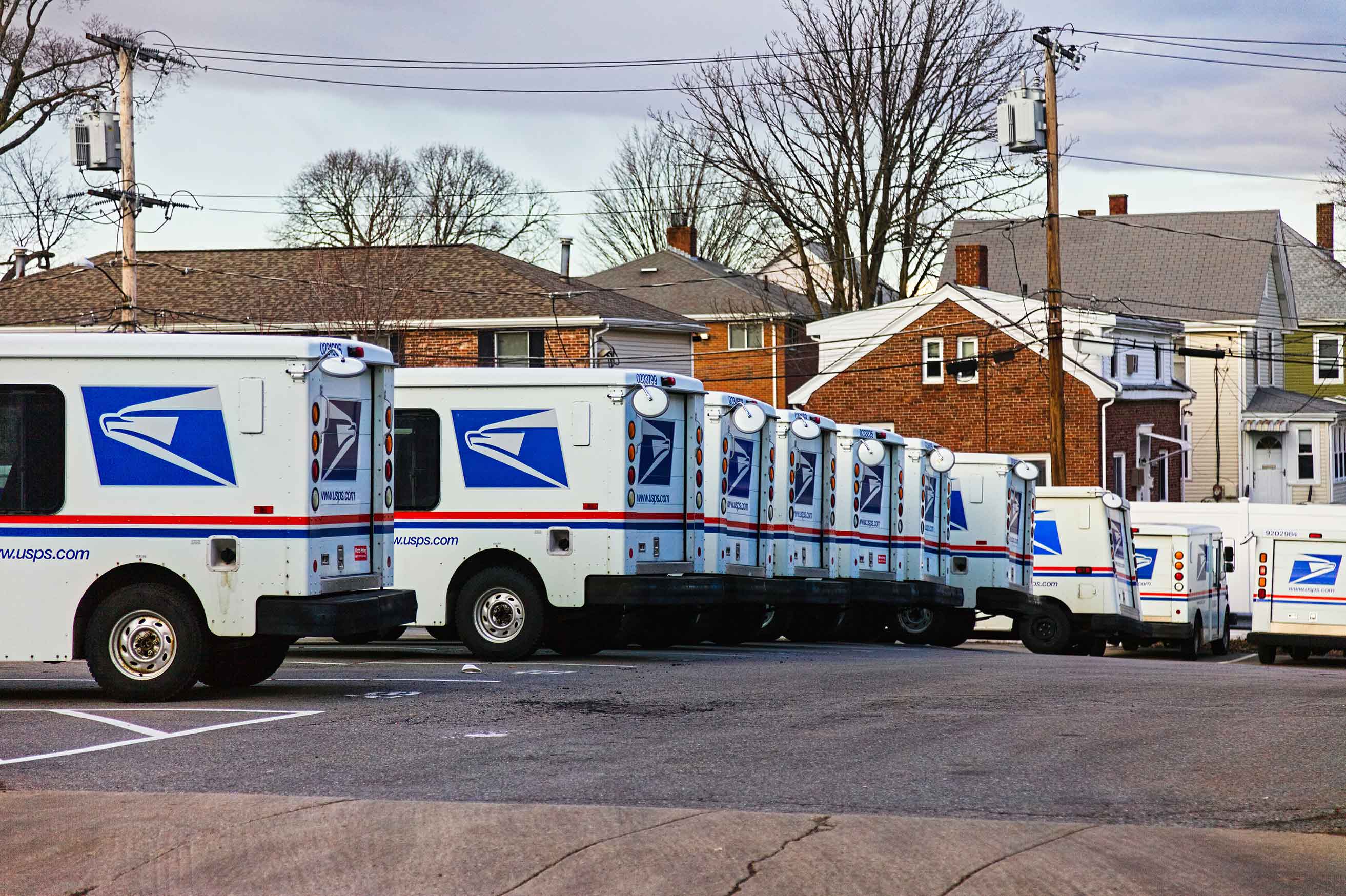
USPS is the one that moved the ground under shippers' feet. Starting July 12, 2026, USPS shifts from a 166 to a 139 divisor for any parcel larger than 1 cubic foot, alongside a manifest requirement for accurate dimensions and a phased Dimension Noncompliance fee for shippers who submit wrong or missing measurements.
That divisor change alone raises billable weight on affected packages. A 12-inch cube that priced out to about 11 pounds under the old ÷166 math jumps to roughly 13 pounds under ÷139, according to Ship.
A few operational notes worth building into your process:
- Corrections often come from automated scan tunnels at carrier hubs, not manual audits, so disputing one requires your own measurement record.
- Dispute windows are typically short. Keep timestamped proof ready before you ship, not after a correction lands.
- If your volume is split across carriers, rate-shop quarterly. A box that is cheap on FedEx at 139 might land differently once USPS applies the same divisor at a different threshold.
How Do You Measure a Package Correctly?
Most DIM disputes trace back to sloppy measuring, not carrier error. Measure the longest point on each side, including any handles, gussets, or protrusions, since carriers price the box's full footprint, not its printed nominal size. A box labeled "12x9x6" by the manufacturer might actually measure 12.3 inches once flaps and reinforcement are accounted for, and that 0.3 inch rounds up to a full billable inch.
- Round each fractional dimension up to the next whole inch before calculating, never down and never to the nearest inch.
- Include any external packaging, straps, or void-fill bulges in your measurement, not just the product inside.
- Watch for irregular shapes: a rectangular product in a slightly larger box still measures at the box's outer dimensions, not the product's.
- For high-volume operations, invest in NTEP-certified dimensioning equipment or at minimum log timestamped photos with a tape measure visible, since certified measurement records are the strongest evidence in a correction dispute.
Pro Tip: Audit your five highest-volume box sizes once a quarter. If any of them measure within a quarter inch of a whole number, you're one manufacturing variance away from a costly round-up.
What Are the Best Ways to Reduce Dimensional Weight Charges?
Cutting DIM charges is mostly a sequencing problem: fix the boxes with the biggest waste first, then build habits that keep waste from creeping back in.
- Right-size every box to the product plus its protection, nothing more. Measure the item with its void fill or insert already in place, then choose the smallest box that fits, ideally landing on a whole-inch dimension so you never pay for a rounding penalty you didn't need.
- Match packaging type to the product. Poly mailers and padded bags work well for soft goods and apparel where crush protection matters less than flexibility. Custom-fit boxes make more sense for anything rigid, stacked, or brand-forward, since a box that hugs the product avoids the extra cubic inches a generic carton wastes.
- Rethink fulfillment mechanics, not just the box. Splitting one bulky order into two smaller shipments sometimes beats DIM pricing on a single oversized box. Cubic pricing tiers or flat-rate options can undercut standard DIM math for specific weight and size combinations, so check both before defaulting to one method.
- Build the fix into your systems, not just your habits. Store exact measured dimensions (not manufacturer nominal sizes) in your warehouse management system, run a box-size optimizer against your SKU catalog, and review DIM corrections monthly to catch drift before it compounds across thousands of shipments.
Pro Tip: Even a 1 inch reduction per side on your most-shipped box can drop it below a DIM pricing threshold entirely, turning a chargeable package into one billed at actual weight instead.
How Can Packwire Tools Help You Control Shipping Costs?
Knowing the formula only helps if you can act on it before a box goes into production. Packwire's Dimensional Weight Calculator lets you plug in product dimensions and see the resulting DIM weight against carrier divisors before you commit to a box size, and the Box Size Optimizer flags where trimming a fraction of an inch changes your billing category.
Custom boxes pay off once your shipping savings outpace the marginal cost of a dieline built to your exact product, which is usually sooner than most operators assume given Packwire's low minimum order quantities. A practical workflow looks like this:
- Measure your product and its protective packaging together, not separately.
- Run those dimensions through a box size optimizer to find the smallest workable footprint.
- Configure the box in Packwire's 3D configurator to confirm fit and finalize artwork.
- Order at low minimums and track the actual measured dimensions in your fulfillment system going forward, since nominal sizes drift once a die is in production.
Why the Conventional DIM Weight Advice Falls Short
Most guides treat dimensional weight as a one-time calculation exercise: learn the formula, plug in numbers, move on. That misses the actual cost driver, which is drift. Box specs drift from nominal to actual once a corrugator run varies by a sixteenth of an inch. Divisors drift when USPS changes theirs mid-year, as it just did. Product packaging drift happens quietly when a vendor swaps void fill for a bulkier alternative nobody flagged.
The USPS shift to a 139 divisor for anything over 1 cubic foot is the clearest signal yet that carriers are closing the gaps shippers used to exploit. Boxes that sat just over that cubic-foot line used to dodge harsher DIM pricing. This workaround is gone as of July 2026, and shippers who built their fulfillment math around the old thresholds need to rerun their numbers now, not after the next invoice arrives.
What should you prioritize first? Not fancier software, not another spreadsheet. Measure your ten highest-volume boxes this week with a tape measure and a carrier's actual current divisor. That single audit will surface more savings than any long-term optimization plan you have not started yet.
— Phil
Order Right-Sized Custom Boxes Built to Cut DIM Costs
Generic cartons force a tradeoff: order oversized stock boxes and overpay on DIM weight, or hunt for a perfect-fit option that does not exist in bulk retail. Packwire removes that tradeoff by letting you design custom shipping boxes to your exact product dimensions, with instant pricing and low minimum order quantities, so right-sizing does not require a warehouse-scale commitment.
Start by running your product dimensions through the Box Size Optimizer to identify your smallest workable footprint, then move into the 3D configurator to finalize your dieline and artwork. Once you have a box that matches your product instead of a shelf-standard size, you are shipping actual weight far more often instead of paying for wasted cubic inches. Start designing your custom box and see the pricing before you commit to a single order.
Sources
- Parcel Dimension Compliance | Federal Register
- Shipping dimensions and weight | UPS
- What is dimensional weight? | FedEx
- Dimensional weight guide | Unishippers